Monday, October 23, 2006

H.R. Slaton's Finishing School for Dudes

It has come to my attention that the manners, grooming, and general cleanliness of the American male are in steep decline. As such, I have decided to found H.R. Slaton's Finishing School for Dudes, in the hope of socializing these unfortunate creatures before I release them back into the wild.

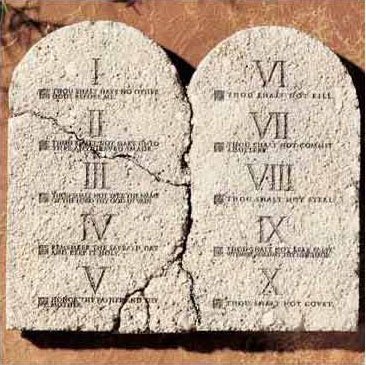
Just as many religious schools (including my own Catholic High School for Boys) post a copy of the Ten Commandments somewhere conspicuous in the school's entryway or lobby, so too will I display a copy of H.R. Slaton's Ten Commandments for Dudes. These directives are as follows:

  1. Thou shalt not fart or belch while in the presence of women; thou shalt keep no other commandment before this.
  2. Thou really, if thou wants to get down to brass tacks about it, should not fart or belch while in the presence of men, either; the aforementioned acts should be only be performed while in the presence of no one but the LORD your God, or maybe while in the woods, though even that is stretching it.
  3. If thou should break the above two commandments, thou should pardon thyself, humbly.
  4. Thou shalt not use the expression, “I need to take a shit.” Thou should rather say, “I need to use the restroom.” Saying “I need to pee” is a bit more acceptable, but really, couldn’t thou do better? Thou did graduate from college, after all.
  5. Thou shalt remember thy bathroom, and keep it cleanly. If thou does not care, fine, but thou should not expect to have many lady callers.
  6. Thou shalt wash thy bed sheets, preferably whenever one does one’s laundry, i.e. weekly. Stains on bed sheets or comforters are unacceptable.
  7. The LORD your God is not really too worried about cursing, because c’mon, they’re just words, after all—but thou should do thou’s best to keep a lid on it around little kids and old ladies and thou’s mom.
  8. Thou shalt shave. Thou shalt also, as needed, “trim the hedges.” (Yes, the LORD thy God said it: get over it, guys, it’s 2006, for My sake.)
  9. Thou shalt put a little thought into thy clothing. The LORD your God doesn’t mean suits 24/7, but enough already with the T-shirt and jeans combo.
  10. Thou shalt try to better thyself and help thy neighbor—but don’t get all high and mighty about it, or the LORD your God will think you’re a real dick.

Friday, October 20, 2006

The terrorists are playing four-square

On CNN.com (click here) there's a story about a GOP terrorism ad. Basically the ad features pictures of Osama bin Laden et al speaking (but with no sound), while quotes from them are displayed on the screen, all to the sound of a ticking clock. The quotes include such stuff as, "With God's permission we call on everyone who believes in God ... to comply with His will to kill the Americans." And as the text of the quote fades away, the words "kill the Americans" remain.

The story goes on to note that:
Meanwhile, footage of terrorists engaged in martial arts and weapons training rolls in the background. One scene shows terrorists traversing monkey bars over fire.
Do I need to point out the idiocy of this? Martial arts? That's really what we're worried about, Osama bin L.'s kung-fu death grip, with spring-chop action? And "terrorists traversing monkey bars over fire"? That's supposed to strike fear into the hearts of voters and get them to vote Republican this coming midterm election?

I suppose if the playground of my elementary school is ever firebombed by terrorists then I'll be in trouble. Otherwise I think we can handle a little jujitsu and jungle-gym firewalking.

But wait ... what if they develop suicide jumping-off-the-swings technology?


At the risk

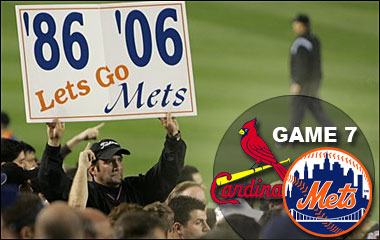
At the risk of turning off many to this blog, I'll write today about sports. Specifically, the Mets/Cards game last night, No. 7 of the NLCS, which the Cards won; St. Louis will face Detroit in game 1 of the World Series on Saturday night.

For New Yorkers, it was a downer. The Mets lost 3-1 with the bases loaded in the 9th, on a strike-out by 25-year-old Cardinal pitcher Adam Wainwright of Carlos Beltrán, who's been a clutch player throughout the postseason for the Mets. He just couldn't do it again.

But the suspense was there, making for a great game. It was 1-1 until the top of the 9th, when Yadier Molina of the Cards boomed a big shot over the left-field wall, pretty much right in same spot where Endy Chávez saved one—in an amazing catch—from going over in the 6th.

One of the reasons I like baseball, particularly in the postseason, is that you really get to savor the suspense of a close game. Unlike in other (timed) sports, baseball allows you to relish the tension of moments like the bottom of the 9th last night, with the bases loaded and Beltrán at the plate, the rookie Wainwright staring him down.

Everyone waits with bated breath, many in the stands (as the TV showed last night) looking to the heavens for help. But last night none came, only rain—but of course it could have gone the other way, an outcome no one can predict. Which, I think, is the most convincing argument for being a sports fan.

Fin.

Thursday, October 19, 2006

Remember the Wrapper

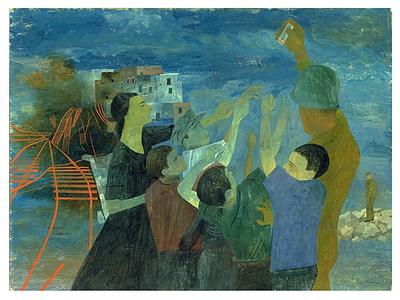
Yesterday, while doing research at work for our profile of the Wm. Wrigley Jr. Co., I found this painting, by Ben Shahn. It's called Remember the Wrapper, and it references the fact that, during World War II, the Wrigley Co. devoted all of its gum-manufacturing capabilities to supplying the troops, leaving no gum for the civilians at home. As such, during the war, Wrigley ran ads that featured a picture of an empty gum wrapper, with the tagline "Remember this Wrapper!" After the war, distribution shifted back to the civilian population, and people did, in fact, remember the wrapper, and soon Wrigley's was back on top of the domestic gum market.

Very interesting; I love bits of historical flotsam like this. And the painting's beautiful—I can't get over the brooding colors. It's currently hanging in Washington D.C.'s Hirshhorn Museum.

Wednesday, October 18, 2006

My tree got tricked

See the buds? My tree is very confused.

Tuesday, October 17, 2006

CBGBs, R.I.P.

As many of you may know, CBGBs, New York City's legendary punk rock venue, closed for good (unless you count its move to Vegas, where all good things go to die, as staying open—which I don't) on Sunday night (actually early Monday morning, but whatever). The final show was, appropriately enough, Patti Smith. I didn't manage to make it to the show, but a friend of mine, Scott Moulaison, did, and blogged about it. Herewith, an excerpt of his fine account of CBGBs' last stand (and the week or so prior, with shows from The Dictators and The Bad Brains):
Finally, last night. The grand finale of CBGB's, led by the grand dame of the Bowery bunch, Pattti Smith. I have probably seen Patti more often since I've moved to the area than any other artist. Perhaps 15-20 times, including with a few exceptions, every New Year's Eve (or the night before), but that did not dim my excitement for the show. The scene outside CB's was a madhouse. At least a thousand people milling about, press everywhere, and lines, lines, lines. But Nicole and I had tickets and we knew there was a light at the end of the rainbow.
To read the whole thing, visit Scott's blog here.

Monday, October 16, 2006

In the Aeroplane over Brooklyn

Walking home last night, I turned right on Conselyea, past an apartment building that I used to be able to see from my place at 354 Graham. The building was built while I was living there, so I got to see it go up and be occupied. As such, I was a little obsessed with its inhabitants, whom I could see from my kitchen windows. I no longer live at 354, but I always think about looking at that building and its balconies from my old windows whenever I walk by.

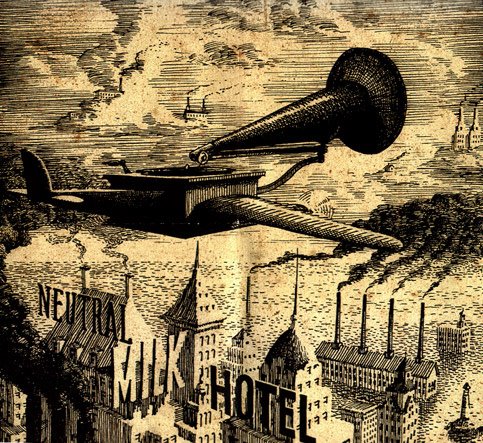
And but so: walking by last night I heard guitar and voices, coming from that building. At first I thought it was a stereo, but I soon discerned it was four guys sitting on their second-story balcony, playing guitar and singing. As I passed the building, one of the fellows shifted to playing the first song from Neutral Milk Hotel's In the Aeroplane over the Sea, "King of Carrot Flowers, Part 1," and another of the guys began singing along:

When you were young you were the king of carrot flowers
And how you built a tower tumbling through the trees
In holy rattlesnakes that fell all around your feet

And your mom would stick a fork right into daddy's shoulder
And your dad would throw the garbage all across the floor
As we would lay and learn what each other's bodies were for

And walking by I thought how amazing that Jeff Mangum's song, ten years on from its release, via Athens, Georgia's Elephant 6 collective, was being sung from a balcony in Brooklyn at night. I stopped and listened for awhile, as a plane whistled overhead into LaGuardia, and walked on.

Tuesday, October 10, 2006

Lefty


This morning before work, as per usual, I sat on my CD cases by the window and drank some coffee and smoked a cigarette. My window looks out onto Kingsland Avenue, which feeds onto the Brooklyn-Queens Expressway, or the BQE. Hence, in the a.m., there's always a good bit of traffic backed up on the street below my window.

On this particular Tuesday morning, I looked down after lighting my cigarette, and saw into the passenger side of an ambulance. A young, crew-cut, red-haired kid, in blue EMS uniform, was in the seat, sipping coffee from a white Styrofoam cup. He grabbed a brown paper sack from the dash and reached inside, which is when I saw his watch. It was on his right hand, meaning he was a lefty, and which suddenly, in my mind, flowered into kind of a short story about this kid.

Just those few details, observing people when they don't know they're being observed, can really be enlightening and inspiring. I recommend trying it sometime, Kingsland Avenue-overlooking window or no.

Monday, October 09, 2006

Old Custer

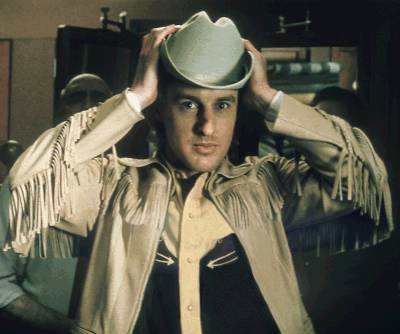
"The crickets and the rust-beetles scuttled among the nettles of the sage thicket. "Vámonos, amigos," he whispered, and threw the busted leather flintcraw over the loose weave of the saddlecock. And they rode on in the friscalating dusklight."
—Eli Cash, reading from his novel Old Custer (the book which, though we all know Custer died at Little Big Horn, presupposes "What if he didn't?") in The Royal Tenenbaums

I was reading on Wikipedia earlier, and apparently Eli Cash was modeled on Cormac McCarthy and Jay McInerney, which is great.

I watched The Grudge on HBO On Demand last night. I could have watched something more substantial, but I didn't want to. It wasn't scary, per se, but it was freaky; it made me jump several times, and feel that weird exhilaration one sometimes gets when watching "scary" movies.

The feeling was unlike the feeling I got when watching, for the umpteenth time the other night, Wes Anderson's breakout movie Rushmore, which is a feeling of chest-swelling cheer and good will toward men. Bill Murray's face and changing expression when he realizes the source of the bees in his hotel room—from grudging, fey respect to revulsion and grim determination—is alone worth the price of admission (in this case, $3 from Vec's Video).

Wednesday, October 04, 2006

I'll tell you this


"I'll tell you this, I don't give a damn about your dreams."
—Dylan, "Thunder on the Mountain," from Modern Times
(Itals mine, to convey Dylan's distinct—or, to some, super annoying—phrasing.)


Dreams are odd birds; you always enjoy your own, and feel they mean a great deal to you, but whenever you try to explain them to others it ends up sounding, well, like you've been smoking something psychoactive. To wit:
"I had this crazy dream last night: I was in the supermarket, but they only were selling geckos, and then you were there, but you turned into my first-grade teacher ... then it became a casino."
Is my meaning gotten? Dream logic can only really make sense to you your ownself, because the dream provides the logic; and without that key, others are lost in making sense of the dreams you tell them.

I doubt that this was to what Dylan was referring when he wrote this line—more likely he meant "dreams" as in "hopes, wishes, grand plans"—but that's one of the great things about words in general: the various ways they can be twisted, the varied meanings they can have.

But, then again, maybe Dylan did mean what I mean. See the last verse of his song "Gates of Eden":
At dawn my lover comes to me
And tells me of her dreams
With no attempts to shovel the glimpse
Into the ditch of what each one means
At times I think there are no words
But these to tell what's true
And there are no truths outside the Gates of Eden

Tuesday, October 03, 2006

Let's Get Small

The following are a few lines from Steve Martin's 1977 comedy/banjo (no, really) album Let's Get Small.
"You just can't sing a depressing song when you're playing the banjo. You can't just go, [plays the banjo] 'Oh death, and grief, and sorrow, and murder.'"

"I always thought the banjo was the one thing that could've saved Nixon. [Plays the banjo.]"

On Nixon traveling to foreign countries: "I'd like to talk about politics, but first a little 'Foggy Mountain Breakdown.' [Plays the banjo, frenetically.]"

"Doesn't it seem like Carter should have a banjo? [Plays the banjo, and adopts a yokel's voice, ostensibly Carter whilst playing the banjo, perhaps strolling shoeless and overall'd down a country dirt road.] 'Oh hyuh hyuh hyoh, hyuh hyuh hyoh ....'"
It's a fine, absurd album, and I highly recommend it to anyone with an interest in comedy.

Monday, October 02, 2006

Which of these doesn't belong?


The following is a list of cakes in the display case of the Corrado Café, across the street from my office:

Chocolate Mousse
Crème Brulee
Pistacchio Mousse
White Chocolate Mousse
Cheesecake
Chocolate Hazelnut
Lemon Bar
Porcupine

Tuesday, September 26, 2006

I have a cold


I have a cold. What I purchased to fix the cold is pictured above. I have no idea why these cold caplets bear the Mark of the Beast; they're not especially effective (as one would expect from a cold medicine recipe obtained by selling one's soul to the devil), nor do they take you on some wild hallucinogenic trip, a la Saturday Night Live's "Ride the Snake" weight-loss program.

Nevertheless, I have a cold and am taking them. They work okay.

Being sick is odd. It puts you in some sort of reverse-telescoped state, where all that exists is the moment you are currently in. I feel as if I've always been—and always will be—sick.

Which of course is ridiculous, and really I don't feel all that terrible. I just feel, as they say, "under the weather."

But the reverse-telescoped sick state is odd not only because of the way it makes you feel while you're inside it, but also because when you come out of it, it really feels like a rebirth, like emerging from a chrysalis, stronger, better, and cleaner. Coffee and cigarettes taste better; the air smells crisper ('specially in fall); you feel more alive to everything going on around you.

Which is all to say that, while I of course would rather not be sick in the first place, coming out of it ain't half bad.

Monday, September 25, 2006

FC is for Fortune Cookie


It is better to have beans and bacon in peace
than cakes and ale in fear.
What?

This makes no sense. First of all, I resent the implication that cakes and ale are superior to beans and bacon; this is clearly anti-Southern prejudice at work.

Second, "beans and bacon" does not equal, part for part, "cakes and ale." Bacon is not something to drink! (Or could it be ...? Perhaps this deserves more research.)

Finally, cakes do not go with ale. Sweets in general do not go with ale, except if you are in Britain, where they buy both beer and chocolate from the bar, which is an abomination.

Saturday, September 23, 2006

In Arkansas


I'm in Camden, Arkansas, where my dad grew up, and where I spent many a week in the summer with my maw-maw, picking pine trees for pennies and collecting interesting rocks.

I'm here for a family reunion. I have been able to see and play with three babies this weekend, one from my friend Joe and his wife Holly, and two from my older sister and her husband.

It's humid here and all we do is eat and "visit." (Which is nice.) Also we watched a football game this afternoon. We (Arkansas) won, but just barely. Final score 24 to 23.

More TK.

Wednesday, September 20, 2006

Anatomy of a Mixed Tape, Track the Last

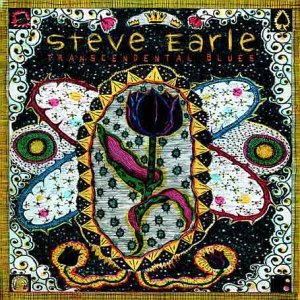
17. Over Yonder (Jonathan’s Song)—Steve Earle


Steve Earle - Transcendental Blues - Over Yonder (Jonathan's Song)

This last track of the Mixed Tape series, from Steve Earle’s 2000 album Transcendental Blues, ends with an execution. Mr. Earle sings:

The warden said he’d mail my letter
The chaplain’s waiting by the door
Tonight we’ll cross that yard together
Then they cain’t hurt me anymore

Long a staunch advocate for abolishing the death penalty, Mr. Earle, who spent some time in the hoosegow himself, in 1994, for drug possession, paints a picture here of an inmate who's made peace with himself and what he’s done, and is ready to die.

Here Mr. Earle is in minimalist mode, painting a quick but full picture with deliberate brushstrokes. Earle repeated the feat a few years later in his growled, droning “John Walker’s Blues,” about the “American Taliban” who was captured in Afghanistan by the CIA after the U.S. invasion of that country. In my opinion, it remains one of the best 9/11-related songs.

But so: even though “Over Yonder (Jonathan’s Song)” ends with an execution, it also brings the Mixed Tape series to a close on a hopeful note. Mr. Earle keens, his voice rising to convey the spirit’s escape from its earthly prison (meaning both bars and body):

‘Cause I’m going over yonder
Where no ghost can follow me
There’s another place beyond here
Where I’ll be free, I believe

The harmonium hums, hymn-like; the mandolin’s plucked plaintively, and the song carries the album, and this Mixed Tape, to its end—which ends, like the classic prison movie The Shawshank Redemption, with a simple statement of hope: “I believe.”

Wednesday, September 13, 2006

Anatomy of a Mixed Tape, Track the Penultimate

16. Please Stay—Warren Zevon


Warren Zevon - The Wind - Please Stay

If you’re on the way out, as Warren Zevon was when he recorded The Wind, the album from which this song is taken, and you’re singing songs about death and leaving, who better to duet with than Emmylou Harris?

In the previous “Anatomy” post, I said that Mr. Zevon had a sense of humor about life’s trials and tribulations. He does, and this album does, but not really this cut. This one’s more straight-ahead mournful. “Will you stay with me to the end?” he sings with Ms. Harris.

When there’s nothing left
But you and me and the wind
We’ll never know ‘til we try
To find the other side of goodbye

And then a throaty sax, like the guys playing under the tunnel walkways in Central Park, starts blowing, really (for me, at least, along with Ms. Harris’ voice) making the song.

A little while before he died, of inoperable lung cancer, Mr. Zevon appeared for a full hour on Letterman. I didn’t know who Mr. Zevon was at the time, but I was transfixed by the bearded, glasses-wearing, obviously worn-down man who, chatting with an at times visibly choked-up Letterman, still managed to be funny, generous, and wise in the face of his own imminent death. He was the only guest that night, and he played several songs in between talking to Dave, one of which, “Mutineer,” remains one of my favorites of Mr. Zevon’s.

But the thing that really struck me was one of the last things he said. Letterman asked him if, in light of his own mortality, he realized anything now about life that he hadn’t before. Mr. Zevon replied, “How much you’re supposed to enjoy every sandwich.”

I think that winking statement covers, in one fell swoop, a great deal of what one needs to know—and keep in mind when times are rough—about our all-too-brief time on this earth.

Tuesday, September 12, 2006

Yesternight It Happened


Yesterday I'd been waiting for some confluence; yesternight it happened. Exiting the train I saw a fella flipping shut Infinite Jest, by David Foster Wallace, my favorite book.

I tapped him on the shoulder. "Are you liking it?" I asked.

He was. He said a friend and he had decided to read it together. He said it was hard to get into, but once you did you couldn't put it down. I'd done the former many times before, and agreed with the latter.

We talked, walking down the platform. "It's funny," he said, "just today I was listening to David Foster Wallace read a story he wrote about 9/11 ...."

I cut him off: "'The View from Mrs. Thompson's,' yes? That's so crazy: I was just this morning telling my friend at work about that story."

"That's right!" he said, amazed I'd known the exact thing about which he was talking.

"You know," I said, "that was originally published in Rolling Stone the week after 9/11. He was the only one that really got it right, because basically he just wrapped it up by throwing up his hands and saying, 'I don't fucking know why this had to happen or what this means either.' And if the smartest guy I've ever read feels helpless and baffled in the face of 9/11, well, it makes me feel like it's okay for me to feel that way as well."

"Exactly," my companion said. "The part I liked best was when he was frantically running around trying to find an American flag, and then someone gave him one and he just broke down and became really emotional."

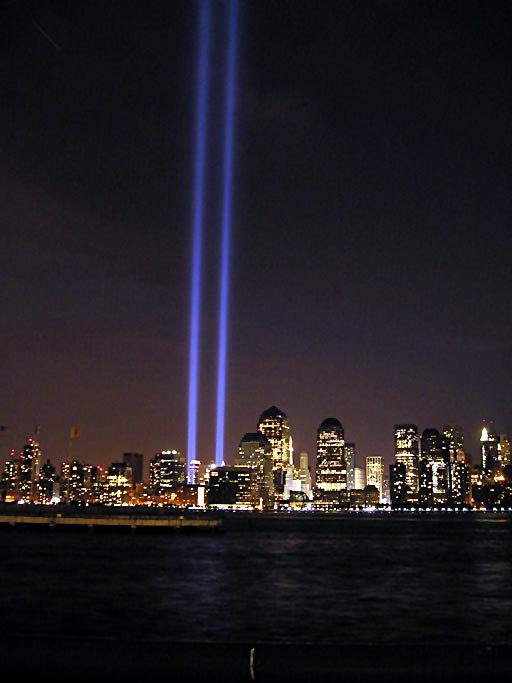
We had been stumping up the steps to the street, Metropolitan Avenue, while the previous conversation occurred. When we got topwise we saw the Towers of Light west down Metro, framed by the buildings.

"I hear you used to be able to see the Towers right there," I said, "framed right in between like the Towers of Light are now."

"Really?" he said. We both stood and stared. The Towers of Light reached high, straight, and blue, occasionally brightly lighting up a low cloud.

"Well, take care, buddy," I said, as I moved to part ways.

"You too," he said. "Farewell."

I walked home and the hair on my arms stood on end; the Towers of Light flanked me to the west all the way home. I felt good.

Sunday, September 10, 2006

In Memoriam

To commemorate what happened five years ago today, I thought I'd post what I wrote in my journal that night, sitting in the cafe on Avenue A.

9/11/01
dark day

- today the twin towers came down. in the street i watched the first one fall and i thought i would be sick. it's so unreal to think of thousands dead - it's not something i can wrap my head around - maybe it's b/c i really haven't experienced death up close during my life - i don't have a one to multiply by a thousand. it seems wrong to write all these "i"s today.

- the tower coming down looked like fight club. and it just wasn't real. all i wanted to do was smoke and drink, & call all my friends and family & tell them I'm alright.

- i got so fucked-up earlier in the summer abt. that woman who killed her kids. That, that I could wrap my head around. That I could feel, that deep sadness.

"it's 71 and clear in New York City right now, as if anybody cares" - heard on the radio

"people are buying up stuff. people are buying up water." - radio, a woman

- i guess writing abt. this is my way of trying to feel, of trying to help others feel, b/c that's the way/medium/etc. i've always felt things most deeply.

- Gov. Pataki & Mayor Giuliani really did a good job today, I thought. made us feel like we're all in this together, here in the city and here in this country. they kind've made me feel like we gotta stick together, talk to each other in elevators more.

last summer was the summer
of mosquitoes, of money
this was the summer of fireflies, of fires
and falling towers

joe said,
"it's good to hear your voice."

i was in the shower
when the planes hit.
two.

i might've been [blank]
hating [blank], who I dreamed about.
i told her i was alive via email
this morning and i didn't know
whether or not i should've

"disagreements? ... work 'em out ..." - Paul Simon

"i want to see you smile again
the day the banks collapse
zee vigilantes in the streets.
i want to see you smile again." - Radiohead shirt

everything feels like prophecy.

- walking out of the building
this beautiful morning
i saw the smoke
the fleets of screaming sirens
and i knew it was the towers

after, everyone seemed to carry
a dark secret in their eyes.
everyone's eyes seemed to plead/say
i know. i know.
i have been witness.

why is it that in times of tragedy
we always feel closest? connected.
b/c when the fragile daily things
that unite us are gone
we look for something more solid

the fire escape scared me.
i wondered, will this hold my weight?

communities are fragile buildings
and when our buildings are gone
we must try to build our communities

people are trapped
under the rubble
and their cellphone batteries
are dying

"brutally reshaped manhattan skyline" - the radio

- these two guys are just sitting in the middle of Ave. A, which is more or less deserted.

- it seems wrong to smile at times like this, wrong to find anything funny. but it also feels wrong to feel too serious, to get caught up in the grim excitement of it all.

- John and I started to get drunk this afternoon, but it started to feel wrong, so we sobered up and went to give blood.

That's the end of my entry for that day. The next week, The New Yorker published an issue. This poem, by Adam Zagajewski, was the final page of the magazine. It meant a lot to me then, about the day and what happened, and it means a lot to me now. Here it is. Be safe today and tell your family and friends that you love them. - HRS

Try to Praise the Mutilated World
by Adam Zagajewski (translated by Renata Gorczynski)

Try to praise the mutilated world.
Remember June's long days,
and wild strawberries, drops of wine, the dew.
The nettles that methodically overgrow
the abandoned homesteads of exiles.
You must praise the mutilated world.
You watched the stylish yachts and ships;
one of them had a long trip ahead of it,
while salty oblivion awaited others.
You've seen the refugees heading nowhere,
you've heard the executioners sing joyfully.
You should praise the mutilated world.
Remember the moments when we were together
in a white room and the curtain fluttered.
Return in thought to the concert where music flared.
You gathered acorns in the park in autumn
and leaves eddied over the earth's scars.
Praise the mutilated world
and the grey feather a thrush lost,
and the gentle light that strays and vanishes
and returns.

Friday, September 08, 2006

Anatomy of a Mixed Tape, Track the Fifteenth

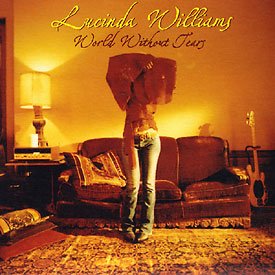
15. People Talkin’—Lucinda Williams


Lucinda Williams - World Without Tears - People Talkin'

Lucinda Williams has been near and dear to my heart ever since her 1998 “breakthrough” album, Car Wheels on a Gravel Road. Following that Ms. Williams released Essence in 2001 and World Without Tears, from which this song is taken, in 2003. Essence I never really got into, but World Without Tears is easily Car Wheels’s equal, albeit in a much different way: World is bruised, roughed-up and worn-out, while Car Wheels is full of vigor, feisty and fight-ready. Lucinda’s all yowl and holler on the earlier album, and all whiskey-scarred croon on the later—though still determined, as this song indicates:

Livin’ … is full of misery and pain
Somebody call you a dirty name
Keep on walkin’
Keep on walkin’

What the album is is mature, which is a rare thing in pop/rock music. (Or, more accurately, in life in general.) I’ve heard the like, maturity-wise, just a handful of times before, including Paul Simon’s wry, winking “Old,” from 2000’s You’re the One, and the whole of Warren Zevon’s swan song record The Wind, recorded and released in the year following his diagnosis with terminal cancer.

Having a sense of humor about the trials and tribulations that are an integral, inescapable part of life is a very important part of what being “mature” means. Ms. Williams notes “people talkin’,” along with “gossip and waggin’ tongues,” but concludes you gotta just “keep on walkin’”; Mr. Simon sings, “Down the decades every year /// Summer leaves and my birthday’s here /// And all my friends stand up and cheer /// And say, ‘Man, you’re old.’”; and Mr. Zevon, well … tune in tomorrow or thereabouts; same Bat Time, same Bat Channel.

Thursday, September 07, 2006

Anatomy of a Mixed Tape, Track the Fourteenth

14. Denton Road—Michael Penn


Michael Penn - Mr. Hollywood Jr., 1947 - Denton Road

As Randy Newman sang—though, apparently, satirically—I love L.A.

I don’t quite know why, as I really haven’t even spent much time there; pretty much a few weeks in a hostel on Venice Beach and a couple pass-throughs of LAX are all I’ve seen of the place. But I like it. And this record, Mr. Hollywood, 1947, makes me nostalgic for it, for the old L.A. of Bukowski’s poem “Pershing Square, Los Angeles, 1939,” of the movie (I know, it was a book before; I haven’t read it) L.A. Confidential … of the city that’s pronounced not “L.A.” but “Loss An-juh-leez.”

Mr. Penn is, as you might have guessed, the brother of Sean and the late Chris; he’s also the husband of Aimee Mann: a mini theme (which seems like it should be an anagram of Ms. Mann’s name, but isn’t) emerges. Also I’m a sucker for proper names in songs:

Goodbye Sally, Simi Valley,
Denton Road, The Roosevelt Hotel
For my own farewell
And if you don’t show, that’s fine.

Friday, September 01, 2006

Anatomy of a Mixed Tape, Track the Thirteenth

13. 4th of July—Aimee Mann

Aimee Mann - Whatever - 4th of July

As I noted earlier, in this post, later in the Mixed CD another Aimee Mann song, featuring the word “June,” would be reviewed. This is it.

There are actually two Aimee Mann songs I know of that include “June”; the one reviewed here, and “Ghost World,” from Bachelor No. 2. This song is from the same album on which “Stupid Thing” is, namely Whatever.

The song begins:

Today’s the Fourth of July
Another June has gone by

Junes go quick. Suddenly, somehow, it’s the Fourth again, year after year, in hot July, and you think, before the summer’s even over, “Where’d it go?” I have felt that way before about many Junes. As Chris Eigeman says as the character Max in Noah Baumbach’s film Kicking and Screaming (just released on DVD as part of the Criterion Collection):

I’m nostalgic for conversations I had yesterday. I’ve begun reminiscing events before they even occur. I’m reminiscing this right now.

I know the feeling; the weight of all the days and people and places that have come before begins to stack up, to bear down on you, and it’s just enervating. Which is not how it is all the time; it’s rather a matter of perspective, a feeling that comes (and goes) from time to time, as Ms. Mann seems to acknowledge with the somewhat flippant summing-up line, “So that’s today’s memory lane.”

Thursday, August 31, 2006

Anatomy of a Mixed Tape, Track the Twelfth

12. To Be the One—Ryan Adams

Ryan Adams - Heartbreaker - To Be the One

Ryan Adams has become progressively harder to like, even for those of us—Dylan fans, alt-country aficionados, Southern boys in New York—with a genetic predisposition for Ryan Adams-liking. Mr. Adams has become an egomaniac, a poseur, fame-addicted, over-prolific and, to be honest, kind of just a dick. None of which excludes him from appreciation (see: Dylan, above); rather it’s his laziness, of late, in his songwriting.

Every now and again he shows a bit of genius—some of the songs on his originally two-part Love Is Hell album, for example, and parts of Cold Roses—but more often than not the costs (in time and, given the number of records he releases, in money) of being a Ryan Adams-liker outweigh the benefits.

Not so with his earlier work, of which his first solo album, Heartbreaker—on which you’ll find this cut, “To Be the One”—is the indisputable apex. The record starts out rocking, loose and freewheeling with “To Be Young (Is to Be Sad, Is to Be High)” and then quickly downshifts, where it remains for the rest of the album.

There are many highlights—”Oh My Sweet Carolina,” a gorgeous duet between Mr. Adams and Emmylou Harris, may be my favorite—and arguably no duds. The record, as the cover suggests, is a cigarette lying back on the bed, looping slow smoke curls upward. “To Be the One” is fine, too, all broke-down worry and unrequited passion and longing.

However, as someone once said (there is some disagreement as to whom), writing about music is like dancing about architecture—which means my words can’t hope to do justice to this song’s singing … so I’ll just leave you with this couplet:

And the empty bottle it misses you
Yeah and I’m the one that it’s talking to

It’s talking to me less and less these days.

Wednesday, August 30, 2006

Anatomy of a Mixed Tape, Track the Eleventh

11. Lived in Bars—Cat Power

Cat Power - The Greatest - Lived In Bars

I am not, like some I know, an ardent Cat Power fan. She has some great songs, and a husky, distinct voice—but I often find her “downness” and fragility—especially on stage—a bit distracting and overwrought. To be fair, I haven’t listed to her earliest albums, What Would the Community Think? and Moon Pix, but I have listened closely to her two most recent records, You Are Free and The Greatest.

The former is definitely the “downer” of the two; I listened to it over and again when I was on Antarctica. (That, however, probably says more about me at the time than it does the album.) It’s good, but avoid it like the plague if it’s a nice day out; it’ll end any happy feeling you’re having post-haste.

The latter, from which the song “Lived in Bars” hails, is a bit more “up.” Or at least, if not “up,” more enjoyable: there’s a big difference between sad and moody in your darkened bedroom and sad and moody in a low-lit Memphis bar, the neon jukebox bubbles floating up slow.

The first verse says it all:

We’ve lived in bars
And danced on tables
Hotel trains and ships that sail
We swim with sharks
And fly with aeroplanes in the air

It’s a weary song, but not without a bit of tired-smile nostalgia for the past—which picks up and takes flight, backed by Memphis horns and a girl-group doo-wop finish, up tempo now, as it nears the end.

Tuesday, August 29, 2006

Anatomy of a Mixed Tape, Track the Tenth

10. Never My Love—The Association

The Association - The Association: Greatest Hits! - Never My Love

“Never My Love” has one of the most recognizable intros of any song ever written, right up there with the intro to Otis Redding’s “Sitting on the Dock of the Bay”; the bass line, which draws you in and then drops down after just a few notes, is instantly recognizable.

I heard this song most recently walking through a café in my neighborhood called Phoebe’s, meeting a friend of mine, pre-meeting, for coffee in the backyard. Wind was through the tree leaves and all was calm; this song nicely accentuated the evening’s feel.

Certain songs sound better not at home; this is one of them. (Jeff Tweedy, in an interview in Magnet magazine, has said something to this effect.) Once, pre-show at The Mercury Lounge, on the edge of New York City’s Lower East Side, I heard the aforementioned songwriter’s band Wilco’s album Yankee Hotel Foxtrot. Though of course (being a big Wilco fan) I was already very familiar with the record, hearing it in that setting was an entirely new and unique experience.

Another time, in the same venue, pre-Lucero show, I heard some keening, foreboding music over the sound system.

“What is this?” I asked my friends. “This isn’t … it can’t be … the Boss, is it?”

It was. I’d always dismissed Bruce Springsteen. But the night I heard Nebraska for the first time, that night at The Mercury Lounge, my ill-informed disdain of an American treasure was kaput.

Friday, August 25, 2006

Anatomy of a Mixed Tape, Track the Ninth

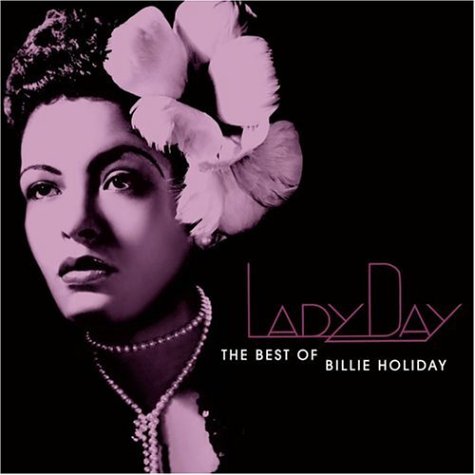
9. Autumn in New York—Billie Holiday

Billie Holiday - Ken Burns Jazz: Billie Holiday - Autumn in New York

For those of you out there in TV land who don’t “get” jazz, I highly recommend Ken Burns’ documentary on the subject. I really didn’t “get” jazz myself until I saw the series, which explains what the first jazz artists were trying to do with their music, how they were attempting to liberate the music from its former forms and constraints.

Previously I’d thought (though not firmly; I knew I didn’t know what I was talking about) jazz to be a bit wanky and not really that important or interesting, with the exception of maybe a few great albums, notably Miles Davis’ Kind of Blue.

After viewing the documentary, I feel I have a greater understanding of the jazz artists’ intent, and therefore can appreciate the music in a much deeper way. Sure, I might still love rock ‘n’ roll above all other musical forms, but now that I understand towards what those artists were striving, I feel I can really appreciate and “get”—or at least move closer to “getting”—it.

But the above’s got virtually nothing to do with the song in question here.

This song, quite simply, whether you know a lot or nothing about jazz, is vision-conjuring and beautiful. (It connects to the above plug for Ken Burns’ documentary in that I first heard it therein.) Billie Holiday makes you feel what autumn in New York is like, in a deliciously sensual way. Listening to this song I can feel the fall air on my skin; the high, angled, coppery sunlight of a fall afternoon “shimmering” down through “canyons of steel.”

Ms. Holiday is singing about a simple happiness, a full fellow-feeling with the city’s other inhabitants—and, in fact, the (at times) seemingly sentient city itself. It’s something I look forward to, but calmly, peacefully. As Ms. Holiday sings, succinctly and sweetly:

It’s autumn in New York
It’s good to live it again

How very true. Or, more accurately, how very soon to be true.

Thursday, August 24, 2006

Anatomy of a Mixed Tape, Track the Eighth

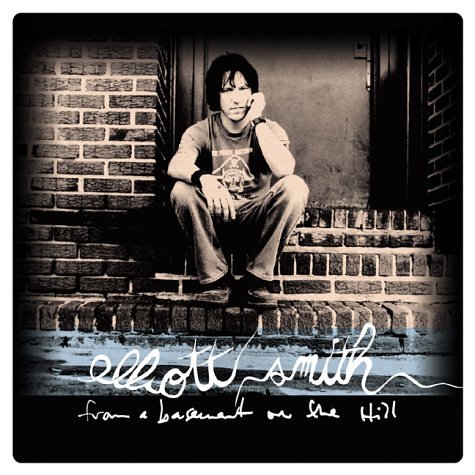
8. Amanda Cecilia—Elliott Smith*

*Go here to download this song.

After Elliott Smith died, bootleg recordings from what might have eventually become his next album, that after From a Basement on a Hill, began to circulate on the Internet. Today they’re known as the “Basement II” demos, a collection of songs that are more spare and less polished than anything Mr. Smith had done in his past several albums, since Either/Or. For those who prefer early-period (aka pre-Good Will Hunting) Elliott, these demos are a real treat—but lyrically they’re more or less concerned with the same subject matter as the songs on From a Basement.

black and blue from passing around
whitey says the lady ain’t a hit no more
cecelia amanda i don’t wanna see you get like you got before
another patient in a party dress yesterday
dancing on a remenant scratch
in a place where lonely men pay to make their opposites match

Bruised-ness, copping, loneliness. It felt for awhile like Mr. Smith took flight from his earthly prison of self-loathing and drugs … but towards the end he seemed to spiral back down; the lyrics on From a Basement are especially foreboding. Here’s a line from the best song on that album, “King’s Crossing” (named for a place in Australia where apparently you could get drugs), which includes a nod to Lou Reed’s “Heroin”:

it don’t matter ‘cause i have no sex life
all i want to do now is inject my ex-wife
i’ve seen the movie and i know what happens

Unfortunately, even though he knew what happens, Elliott couldn’t change the ending to his own story—even though, as one can easily see from these demos and his last album, he clearly saw it coming.

Wednesday, August 23, 2006

Anatomy of a Mixed Tape, Track the Seventh

7. Moonshiner—Bob Dylan

Bob Dylan - The Bootleg Series, Vols. 1-3 (Rare & Unreleased) 1961-1991 - Moonshiner

On my iPod I have four versions of this traditional Irish song: one by Cat Power, two by Uncle Tupelo, and one—probably the most well-known, and the one linked above—by Bob Dylan. Each is different from the others—Dylan’s is matter-of-fact; Cat Power’s stretches out a bit more; and Uncle Tupelo’s is resigned—but all tell the same story: of a man who’s “been a moonshiner for 17 long years,” and who has “spent all [his] money on whiskey and beer.”

I’ve been a moonshiner
for seventeen long years
and I spent all my money
on whiskey and beer
I go to some hollow
and set up my still
if whiskey don’t kill me
Lord, I don’t know what will

I go to some barroom
to drink with my friends
where the women they can’t follow
to see what I spend
God bless them pretty women
I wish they was mine
with breath as sweet as
the dew on the vine

Let me eat when I’m hungry
let me drink when I’m dry
two dollars when I’m hard up
religion when I die
the whole world is a bottle
and life is but a dram
when the bottle gets empty
Lord, it sure ain’t worth a damn

Only three stanzas long, this character sketch nevertheless leaves you with the feeling that you know this moonshiner, this man who has—as I’ve heard said by some—been around the world many times … on a barstool. Nothing’s left for him but his drinks, and though he looks longingly at the “pretty women,” he knows that he’ll never have them. All this has led him to the conclusion that “the whole world is a bottle and life is but a dram.”

But, as with other tragic tales, the act of telling his story lends the moonshiner a measure—a dram, you might say—of dignity … as well as immortality, as he continues to live in the voice of Dylan, Jay Farrar, Chan Marshall, and surely many more to come.

Tuesday, August 22, 2006

Anatomy of a Mixed Tape, Track the Sixth

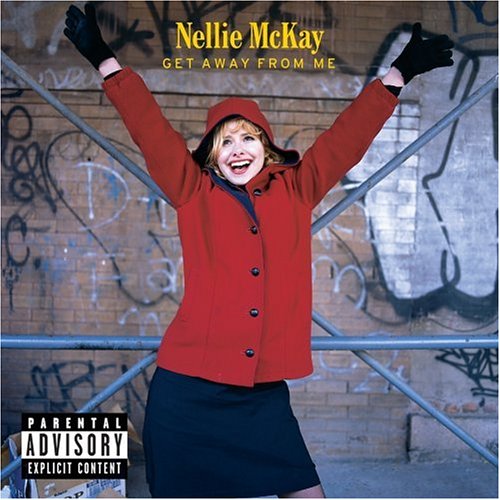
6. Manhattan Avenue—Nellie McKay

Nellie McKay - Get Away from Me - Manhattan Avenue

Nellie McKay is nothing if not multi-talented. On her debut double album Get Away from Me, Ms. McKay (pronounced McKai) leapfrogs effortlessly among varied genres from hip-hop (“Sari”) to torch ballad (“Manhattan Avenue”).

The song in question here is a languid, slow-moving, summery thing, a fine foil to an older song appearing later in this mixed tape. Ms. McKay doesn’t quite have the vocal chops that the later (or, depending on how you look at it, earlier) artist does, but she can certainly sing, and paint a scene—namely, Greenpoint, Brooklyn’s Manhattan Avenue, the main thoroughfare through a tightly knit Polish community not too far from my apartment, and off which several of my friends pay their rent.

Manhattan—the borough, not the avenue—always gets all the love in songs and movies; not so much Brooklyn, except, perhaps in hip-hop songs … but that’s not really the sort of Brooklyn I love.

Rather, the sort of Brooklyn I love is Ms. McKay’s version, a late-afternoon/early-evening stroll north up Manhattan Avenue towards the Pulaski Bridge, with the setting sun on the other side of the more-famous borough peeping along Greenpoint’s west–east facing side streets. The smells of Polish sausage and bacon, the pictures of the late Pope John Paul II still adorning shop windows, the old men shuffling along, the young hipsters happily arm-in-arm … me going to a Saturday night meeting.

Ms. McKay captures that here: the “scuzzy hue,” the streetlight, “chipping paint,” the “mugger and a child”—it’s a bit broke-down, but lovely, too. It’s lived-in, it’s well-loved … and Brooklyn at dusk, like Manhattan the borough, only less heralded, can feel impossibly romantic.

To wit:

Send a breeze
A pit bull’s yelp
A tender squeeze
A cry for help
Make it now
And make it fast
Such memories
Can never last
I long for the days
Music and mayhem
Mama’s a smilin’ friend
In the scuzzy hue of the sunlight
Manhattan Avenue

Lionel please
Watch o’er our door
The children tease
I beg for more
Chipping paint
The ceiling’s spent
Aw ain’t it great
Can’t make the rent
I long for the days
Kittens are meowing
Junkies are prowling
Deep in the jazzy hue of the streetlight
Manhattan Avenue

How wild it is
What strange a vice
That a mugger and a child should share the same paradise
Oh but dreams come true on
Manhattan Avenue

I was wrong

"My Humps" is much, much worse.

Monday, August 21, 2006

Anatomy of a Mixed Tape, Track the Fifth

5. Stupid Mouth Shut—Hem

Hem - Rabbit Songs - Stupid Mouth Shut

Hem’s another band I got into when I was DJing at KXUA, this time in the spring of my senior year. This wistful Brooklyn “countrypolitan” group is special to many of my friends, not least for their first album, Rabbit Songs, which opens with a lo-fi tape recording of Hem’s singer, Sally Ellyson, singing a bit of lullaby called “Lord, Blow the Moon Out, Please”—an audition of sorts in response to the singer-seeking ad that band leader Dan Messe had posted in The Village Voice.

Mr. Messe writes the words and Ms. Ellyson sings them. And what words and what a voice they are: you’ll have to hear Ms. Ellyson sing to get the full effect, but Mr. Messe’s words are impressive on their own, full of surprising turns of phrase:

The sidewalk bends where your house ends
Like the neighborhood is on its knees
You’re surrounded by a chain-link fence
That keeps me out but lets me see

Well I come by most every night
The shutters pounding in the breeze
A clothesline strung like paper kites
That blow my words right back at me

But someday when my heart exhales
I’ll tell you everything
These sweet words spilling all about us
I’ll say please please be with me
And I’ll breathe so easily
But instead I’m turning blue
I look at you
And keep my stupid mouth shut

The hall light streams out through the screens
And the shadows capture me in webs
Just tangled up in what I’ve seen
And every word I have not said
I have not said

‘Cause the sidewalk bends where your house ends
Like the neighborhood is on its knees

It’s lazy, screened-in summer porch, on the bed with the ceiling fan turning unproductively music. And very American, in the best sense of the word.

Friday, August 18, 2006

Anatomy of a Mixed Tape, Track the Fourth

4. Stupid Thing—Aimee Mann


Aimee Mann - Whatever - Stupid Thing

Aimee Mann’s songs are full of traps and landmines, double-dealings and betrayals. “Stupid Thing” especially, from her first solo album, 1993’s Whatever, is a good example of this, with its many dependent clauses stacked shakily one on top the other.

Nothing was saving our day
There was nothing to say
But you said something anyway
Claiming I stepped out of line
Which forced you to leave me
As if that idea was mine

And the qualifiers: “but,” “which,” “as if”—all serve to accurately convey that maddening, cat’s cradle-entangled feel to the end of certain relationships, where nothing right can be said. But Ms. Mann lifts things, albeit resignedly, with the worn-out chorus:

Oh, you stupid thing
Speaking of course as your dear departed
Oh, you stupid thing
It wasn’t me that you outsmarted
You stupid thing
Stopping it all before it even started

It’s not vicious, it’s not (too) bitter: it’s just “oh, you stupid thing.”

Another thing I love about Ms. Mann, and that’s demonstrated well in this song, is how good she is at internal rhyme—the “speaking of course as your dear departed” line stands out in particular, making the song feel woven in and out of its self, mixed-up and labyrinthine.

NB: Later in this “mixed tape” another Aimee Mann song, featuring the word “June,” will be reviewed.

Wednesday, August 16, 2006

Anatomy of a Mixed Tape, Track the Third

3. San Fran—Kitty Craft*

This bit of ephemera dates back to the fall of 2000. I was back from a year away at Oxford for my senior year at Arkansas, and joined the newly formed KXUA college radio station as a DJ. My first shift was from 2 to 4 in the morning. I loved it. My DJ name was Spaceman H, a nod to the frontman of Spiritualized and Spacemen 3 co-founder, J. Spaceman. I figured whomever “got it” wouldn’t mind my semi-rip-off.

We had to play around 10 tracks from “heavy rotation” albums and a handful of tracks from “light rotation” albums each hour. I enjoyed DJing because it regularly exposed me to new music in a structured, weekly way. I continue to seek out new music, and have more luck and success than most, but I’m just not as likely nowadays as I was then to land on that wholly random, out-of-nowhere album like the one this cut’s from: Kitty Craft’s Catskills.

“Hey San Fran.” There’s not much to the song, but it takes me back to two specific times and places: one, Thanksgiving, November 2000. I’d ordered this CD, along with a couple of others, and received them just before my family and I left for our traditional Thanksgiving in Memphis with my mom’s family. I’d been away at Oxford the year before, so it was my first “real” Thanksgiving in two years. My brothers and I listened to this album on the drive up to Memphis the day before Thanksgiving.

The song also reminds me of, duh, San Fran. But specifically North Beach, and The Green Tortoise Hostel, where I’ve stayed the couple of times I’ve been in San Fran. Both times it’s been alone and at the end of a long trip … and both times the town’s refreshed me with its coolness (temperature-wise) and its lack, at least for me, of memory. Much like this song and this album—which makes for a lovely fall day, windows-open listen. I highly recommend it.

*Note—Again, this one’s not on iTunes. But go to this page and click on the sample for the song, just down the page a bit.

Anatomy of a Mixed Tape, Track the Second

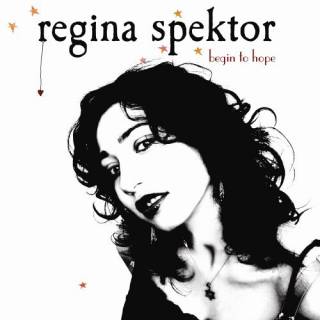
2. Samson—Regina Spektor

Regina Spektor - Begin to Hope - Samson

Regina Spektor has an enchanting voice. Some of you out there in TV Land might think she sounds a bit like Tori Amos—and you’d be right. But Ms. Spektor doesn’t traffic in the same material as Ms. Amos, and refreshingly so. Ms. Amos, while certainly talented, seems to me a bit narcissistic and overwrought. It gets tiresome.

Ms. Spektor’s songs, while certainly full of feeling, don’t come off as melodramatic. This song, “Samson,” is a reimagined Bible story, much like the reimagined fairy tales of the late Angela Carter’s book The Bloody Chamber. The basic format runs thusly: take a story we all know (here, Samson & Delilah; there, Little Red Riding Hood, Bluebeard, etc.) and use the familiar signs and symbols to a different effect and emotion.

But really you just have to listen to it, because these words in no way do justice to the fragile beauty and nostalgia of this song—the tender way in which one sometimes remembers an old love, with all the bitterness and problems sorted out & away by time.

Tuesday, August 15, 2006

Anatomy of a Mixed Tape, Track the First


  1. Thunder Road—Badly Drawn Boy*
It's an accepted fact that classic songs, the best-loved songs, are hard to cover. Songs that have been implanted deeply into the minds of the general public, well ... people don't like you messing with them. The only way around this is if one radically reinvents the song in question (e.g., Dylan's "All Along the Watchtower," covered by Hendrix).

"Thunder Road" is one of these. And Badly Drawn Boy figured out how to cover it properly: by reimagining it from the ground up, totally turning it inside-out, taking a single note of its complex emotion and extrapolating that out into something new.

If Springsteen's original of "Thunder Road" was like a souped-up muscle car, this Badly Drawn Boy version is like that same muscle car, only 20 years old now and rusting on blocks in the front yard of this song's protagonist. The feeling's like the memory of a feeling, as the man in question sips a drink on his porch and contemplates the rusted-out vehicle as the sun's setting.

*Note—an iTunes link isn't available for this song, because it comes from a sort of obscure Springsteen tribute CD packaged with a couple years-old issue of Uncut magazine. Future posts will, where possible, contain links to iTunes.

Wednesday, August 09, 2006

The Worst Song Ever

Much like Lance Armstrong repeatedly bested his own record in the Tour de France, Fergie and the Black Eyed Peas continue to one-up themselves in the category of Worst Song Ever.

Previous record-holder "My Humps," a Black Eyed Peas "song" with lead vocals by the inimitable Fergie, should have stayed atop the Worst Song junk heap for a long time ... but, with innovators such as these loosed upon the world, anything can happen.

In this case, what happened was Fergie's new song, "London Bridge."

But maybe we first need to quickly lay out the Worst Song ground rules.
  1. The song must be ubiquitous, all over the place, very popular.
  2. The song must be catchy—but not good catchy; catchy like Avian Bird Flu. Catchy like if you happen to hear it in the morning it'll be in your goddamn head all day (as the travesty "London Bridge" is now).
  3. The song must not merely be annoying or poorly made. (In fact, annoying or poorly made songs usually won't qualify for Worst Song status, as they're usually fairly easy to ignore.) Rather, the song must be a real bellwether of our degraded times; narcissistic, product-obsessed, vacuous, empty, wholly consumerist.
  4. Extra points if it sounds exactly like another earlier, better song.
"London Bridge" hits all the high points here. Of course, it meets the requirements of No. 1. Already this abortion is showing up everywhere, most notably TRL. Today I am a case study in the fact that the song meets No. 2—I can't seem to get its inane chorus out of my head.

Skipping to No. 4: it sounds exactly like Gwen Stefani's "Hollaback Girl," of the summer of 2005. Now, "Hollaback Girl" I thought was a good song. It was catchy and everywhere, true, but I feel like it was a bit subversive and surreal, which redeemed it. The whole "bananas" thing? I dunno, I liked it.

But this song, "London Bridge," phew. I mean, it hits No. 3 to the T. As with "My Humps," it's chock-a-block with product placement, the glorification of empty celebrity VIP room bullshit, and so on—but, I think, it gets lifted above even "My Humps" due to its embarrassingly lazy "rapping" and awful lyrics. To wit:
Oh shit, oh shit, oh shit
When I come to the clubs, step aside...
Pop the seeds, don't be hating me in the line
V.I.P because you know I gotta shine
I'm Fergie Ferg
Give me love you long time

All my girls get down on the floor...
Back to back drop it down real low
I'm such a lady but I'm dancing like a ho
Because you know what, I don't give a fuck
So here we go!

Chorus (x2)
How come every time you come around
My London London Bridge want to go down
Like London London want you to go down
Like London London be going down like (x2)

Drinks start pouring
And my speech start slowing
Everybody start looking at you

The Grey Goose got the girl feeling loose
Now I wishing that I didn't wear these shoes
It's like everytime I get up on the dude
Papparazzi put my business in the news
And I'm gonna get up out my face (oh, shit)
Before I turn around and spray your ass with mace (oh, shit)
My lips make you want to have a taste (oh, shit)
You got that? I got the bass
Delightful, isn't it? Just wait. Hear it on the radio and see for yourself. I mean it's really like watching a train wreck.

Any and all other Worst Song recommendations can be posted to the comments page. I will analyze each that is given me.

Monday, August 07, 2006

Four of them

This is My Sister, Carrie (2nd from left), with Diana, Nicole, and Erin, at Coney Island a couple of Saturdays ago. This photo was taken at the Strawberry Shortcake stand, which is maybe the healthiest thing sold on Coney Island. (That's not saying much, but still.)

That day, we rode the Cyclone, the Log Flume ride (which is for babies, but was fun), and Erin and I rode this awful thing that spun around and up and down and upside-down and everything in between. Literally within 30 seconds of being on it I was sure I was going to puke. Luckily, Erin was able to talk me through it—though I didn't feel quite right for a good hour afterwards.

It was very nice to have My Sister Carrie in town. She is 17, and very beautiful and wonderful. I look forward to seeing what sort of woman she grows into.

Saturday, August 05, 2006

Two of us

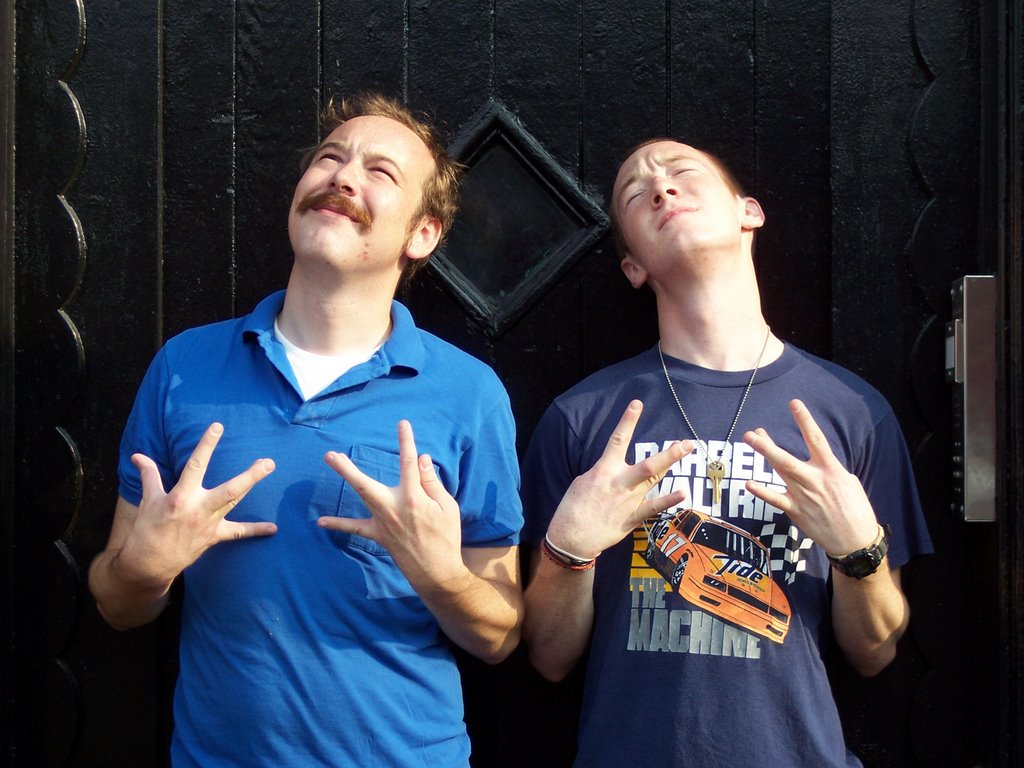
This is me and my brother, Sam. He lived with me this summer. He is wearing a Darrell "The Machine" Waltrip T-shirt. He's not actually a NASCAR fan. We had a very good time hanging out this summer, and I'm going to miss him. My sister, Carrie, also visited us just this past week, but unfortunately I didn't take any photos. It was weird–but good–walking up Metropolitan Avenue, which I've walked so many times alone, with the both of them.
Mad respect.

Thursday, August 03, 2006

Beat the heat

Here are a few ways to beat the heat. One surefire method is to not use the phrase "beat the heat," because it's stupid. It's one of those lazy journalism phrases that just gets repeated ad infinitum because, well—it's too hot to think of anything better.
  1. Wet a bandanna. Put in freezer. Wait half-hour. Wrap around neck.
  2. Take one cement mixer truck. Fill with ice. Turn on mixer and get inside.
  3. Stand in the entryway of Whole Foods, which is equipped with some massive AC blower.
  4. Buy kiddie pool. Fill with water. Get in and float like an alligator. Come back the next day to find kiddie pool has melted.
  5. Hang out in the make-up store Sephora, which is kept at a cool 60 degrees Fahrenheit, to prevent make-up from melting.
  6. Purchase, as per the documentary film Hands on a Hardbody, an AC unit from an abandoned Wal-Mart. Attach to trailer home and turn all the way down. (Will cool to "about 35, 40 below.")
  7. Elect Al Gore president. Wait 50 years.
  8. Rig battery pack to portable fan. Strap fan around midsection, pointing directly at genitals. (Tip: wear no pants to increase your coolness!)
  9. Ride subway aimlessly. (Note: this works best in London, where you can ride the Circle Line all day and not end up in, say, Canarsie.)
  10. Go see a movie. Most any movie will do; just be careful not to watch something like Little Man, which will negate the theater's cool AC by boiling your blood with its stupidity.
Anyone else out there in TV Land have any tips to ... um ... god, it's too hot—the hell with it ... beat the heat?